Perkins V Compliance: How Data Tracking Impacts CTE Funding
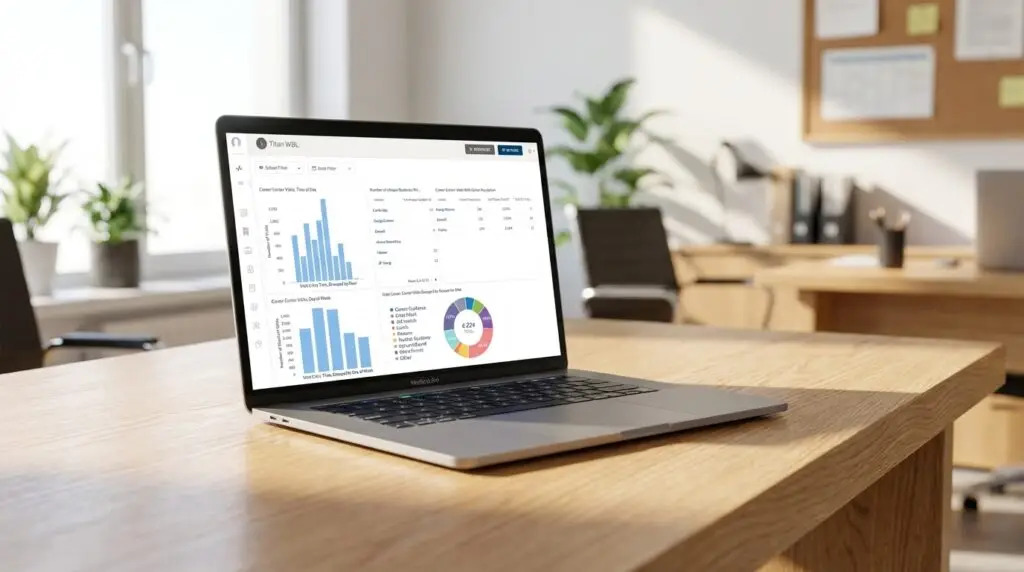
Navigating Perkins V compliance is one of the most critical challenges facing school districts today. If your district relies on federal support to run its educational initiatives, you already know that securing your CTE funding requires meticulous data collection and reporting. However, many districts still rely on outdated spreadsheets and scattered applications to track student progress, leaving them vulnerable to data errors and compliance failures. As a result, educational institutions are missing out on essential funding opportunities while coordinators drown in administrative paperwork. By modernizing your data tracking systems, you can transform a stressful auditing process into a streamlined operation that guarantees state accountability and proves the true value of your programs.
Understanding Perkins V Compliance and State Accountability
To fully grasp the importance of Perkins V compliance, we must first look at the legislation driving it. The Strengthening Career and Technical Education for the 21st Century Act, commonly referred to as Perkins V, was signed into law to improve the quality of technical education across the United States. Therefore, the federal government mandates that states and local districts provide transparent, data-backed evidence of student performance. This process of demonstrating success is the foundation of state accountability. When districts fail to meet these stringent reporting standards, they risk losing the financial support necessary to maintain their educational pathways.
Furthermore, the legislation places a heavy emphasis on aligning educational programs with the actual needs of the local labor market. Consequently, administrators cannot simply report that a program exists; they must prove that it effectively prepares students for high-skill, high-wage, or in-demand occupations. This requires tracking detailed metrics regarding student enrollment, retention, graduation rates, and post-secondary placement. Without a centralized system to capture this information, districts face an uphill battle when compiling their end-of-year reports.
In addition, the law requires a Comprehensive Local Needs Assessment (CLNA) to be completed regularly. This assessment forces districts to evaluate their performance using historical and current data. If your data is fragmented across various platforms, completing the CLNA becomes a monumental and frustrating task. Accurately tracking this data is not just about following rules; it is about guaranteeing the future viability of your career initiatives.
The Shift from Perkins IV to Perkins V
Transitioning from the previous iteration of the law required a massive shift in how districts operate. Previously, under Perkins IV, the focus was often heavily placed on broad participation numbers and general program completion. However, Perkins V compliance shifts the focus directly onto measurable student outcomes and data-driven decision-making. As a result, educational leaders must dig much deeper into the demographics and specific achievements of their student populations.
Moreover, the new legislation introduced the concept of the CTE concentrator at the secondary level. A concentrator is now defined more specifically as a student who has completed at least two courses in a single career and technical education program or program of study. Therefore, districts must track individual student course histories with pinpoint accuracy. If a student’s records are lost in a disjointed spreadsheet, the district cannot claim them as a concentrator, which directly negatively impacts funding metrics.
Additionally, state accountability metrics now demand a rigorous analysis of how well programs serve special populations. Districts must break down their performance data by race, gender, socioeconomic status, and disability status. Consequently, achieving true compliance means possessing the technological infrastructure to filter, sort, and analyze massive amounts of student information at a moment’s notice.
The Link Between Accurate Data and Perkins V Compliance
Data is the lifeblood of modern educational administration. When it comes to Perkins V compliance, the accuracy of your work-based learning data dictates the narrative you present to the state. State agencies use this data to determine whether your district is meeting its negotiated performance targets. If your numbers are inaccurate or incomplete, the state may require you to implement a strict improvement plan, which diverts valuable time and resources away from student instruction.
Therefore, tracking mechanisms must be robust and error-free. Every time a student logs an internship hour, earns an industry-recognized credential, or completes a capstone project, that event must be permanently and securely recorded. In addition to proving compliance, this accurate data allows district leaders to identify which programs are thriving and which ones require intervention. This proactive approach is impossible when relying on manual data entry.
Furthermore, accurate data tracking provides the foundation for winning additional competitive grants. When a district can clearly demonstrate a high return on investment through detailed student outcome reports, they become highly attractive candidates for state and federal workforce development initiatives. You can read more about the specific statutory requirements directly via the official Perkins V guidelines from the Department of Education.
Common Pitfalls in Perkins V Reporting
Despite the high stakes, many districts continue to struggle with their reporting processes. The most common pitfall is the reliance on decentralized data storage. When individual teachers or coordinators maintain their own separate spreadsheets, the district lacks a single source of truth. Consequently, compiling the final state report turns into a chaotic scramble of merging documents, hunting down missing signatures, and guessing at incomplete records.
Another major issue is the lack of real-time visibility. If administrators only review their data at the end of the academic year, it is too late to course-correct. For example, if a specific demographic is underperforming in a critical program, leaders need to know immediately so they can provide targeted support. Without real-time tracking, these equity gaps remain hidden until the state audit highlights them.
To avoid these detrimental errors, districts must be aware of the following frequent reporting mistakes:
- Failing to accurately identify and track CTE concentrators across multiple semesters.
- Losing physical paperwork, such as employer evaluations and student permission slips.
- Inconsistent tracking of work-based learning hours due to reliance on manual student reporting.
- Inability to disaggregate performance data by special population categories.
- Misalignment between reported program outcomes and the local Comprehensive Local Needs Assessment.
How to Automate Your Perkins V Compliance Tracking
The only sustainable way to handle the complexities of state and federal reporting is through intelligent automation. Transitioning to a centralized management system eliminates the friction of manual data entry and drastically reduces the risk of human error. By automating your Perkins V compliance workflows, you free your educators to focus on what matters most: guiding students toward successful careers.
Therefore, modern districts are adopting platforms designed specifically for the unique needs of career education. These systems automatically aggregate data from various touchpoints, creating a comprehensive profile for every single student. Consequently, when the time comes to generate state accountability reports, the process requires only a few clicks rather than weeks of agonizing administrative labor.
Streamlining Work-Based Learning Data
One of the most challenging aspects of compliance is tracking experiences that occur outside the traditional classroom. Managing internships, apprenticeships, and job shadows requires capturing data from multiple external sources. An automated system provides students with mobile-friendly tools to log their hours, which are then instantly verified by their site supervisors. This creates an unalterable, audit-proof digital trail that perfectly satisfies state reporting requirements.
Simplifying Employer Collaboration
Successful programs rely heavily on strong industry partnerships. However, employers are often deterred by cumbersome paperwork and complex communication channels. Automating your compliance data also means simplifying employer collaboration. When businesses can easily approve hours, submit evaluations, and communicate with coordinators through a unified portal, they are much more likely to continue hosting students year after year.
Maximizing CTE Funding Through State Accountability
Compliance should not be viewed merely as a defensive strategy to avoid penalties. Instead, mastering Perkins V reporting is a proactive strategy for maximizing your CTE funding. States distribute reserve funds and competitive grants to districts that can prove innovation and high performance. If your data tracking is impeccable, you can easily build compelling, evidence-based narratives that secure these additional financial resources.
In addition, demonstrating strong state accountability allows district leaders to justify local budget requests to their school boards. When you can present a clear dashboard showing exactly how many students earned industry credentials or secured employment post-graduation, it is much easier to defend investments in new equipment, software, and personnel. Data transforms subjective programmatic claims into undeniable facts.
Furthermore, accurate tracking ensures you receive every dollar you are entitled to based on enrollment and concentrator formulas. Every uncounted student is a missed funding opportunity. By implementing a system that guarantees no student falls through the cracks, you optimize your formula-based funding allocations, ensuring your programs remain fully resourced.
The Role of Stakeholders in Perkins V Compliance

Achieving perfect reporting is a collaborative effort that requires the participation of multiple stakeholders across the district. Counselors play a pivotal role in ensuring students are correctly enrolled in aligned programs of study. Therefore, they need access to clear data regarding course sequences and concentrator status. If counselors operate in a silo, students may accidentally take courses that do not count toward state accountability metrics.
Similarly, classroom teachers and work-based learning coordinators are on the front lines of data collection. They are responsible for logging skill attainments, tracking daily attendance, and managing employer relationships. Consequently, providing these educators with intuitive, time-saving software is critical. If the tracking system is too difficult to use, user adoption will fail, and the data will inevitably become corrupted.
Finally, district administrators and CTE directors must act as the strategic overseers of the entire process. They need high-level dashboard views to monitor district-wide progress toward Perkins V compliance targets. By fostering a culture of data literacy among all these stakeholders, a district can ensure that tracking becomes a seamless part of the daily educational workflow.
Building Equitable WBL Programs with Real-Time Data
One of the most vital mandates of the new legislation is the focus on equity and access. WBL programs must serve all students, regardless of their background or personal challenges. To prove you are meeting this mandate, you must track participation and success rates across various demographic subgroups. However, identifying equity gaps using manual spreadsheets is nearly impossible.
Consequently, automated tracking systems are essential for building truly equitable experiences. With real-time data filtering, coordinators can instantly see if certain student populations are being excluded from high-quality internships or if specific groups are failing to attain industry credentials. This immediate visibility allows educators to step in and remove barriers to participation before the school year ends.
By leveraging a centralized work-based learning management platform, districts can ensure their resources are distributed fairly. Tracking this data not only ensures compliance with federal civil rights guidelines but also fulfills the moral obligation of public education: preparing every single student for a successful and fulfilling career in the modern workforce.
Preparing for a State Audit

The phrase “state audit” often strikes fear into the hearts of district administrators. However, an audit is simply a verification of the data you have already reported. If your tracking processes are sound, an audit should be a routine administrative event rather than a crisis. The key to stress-free audit preparation is continuous, automated documentation.
Therefore, districts must ensure that every data point has a corresponding digital artifact. If you claim a student completed 100 hours of an internship, you must be able to produce the signed timesheets and the employer evaluation. A modern tracking platform automatically archives these documents and ties them directly to the student’s digital profile. As a result, when the auditor requests proof, you can retrieve the necessary files in seconds.
To ensure your district is always audit-ready, follow these best practices:
- Implement a centralized digital repository for all compliance-related documentation.
- Conduct internal mini-audits quarterly to catch missing data before the official state report is due.
- Ensure all user roles within your tracking software are clearly defined to maintain data security and integrity.
- Regularly train staff on the specific data definitions required by your state’s department of education.
- Use automated alerts to notify coordinators when student compliance documents are missing or expiring.
Frequently Asked Questions
What is the main goal of Perkins V compliance?
The primary goal of Perkins V compliance is to ensure that federal funding for career and technical education is utilized effectively to prepare students for the modern workforce. It requires districts to use data to prove that their programs are aligned with local economic needs, that they are closing equity gaps among special populations, and that they are delivering measurable student outcomes.
How does data tracking impact CTE funding?
Data tracking directly impacts CTE funding because states allocate federal Perkins funds based on performance metrics and enrollment data. If a district cannot accurately track and report its CTE concentrators, student credentials, and post-secondary placement rates, it risks failing state accountability standards, which can lead to a reduction or complete loss of crucial program funding.
Why are spreadsheets bad for Perkins V reporting?
Spreadsheets are highly prone to human error, lack real-time synchronization, and easily become siloed on individual computers. When multiple educators use different spreadsheets to track work-based learning data, compiling an accurate, district-wide report for state accountability becomes an administrative nightmare, greatly increasing the risk of compliance failures and lost funding.
How can software improve employer collaboration in WBL programs?
Purpose-built software provides a centralized portal where employers can easily approve student hours, submit performance evaluations, and review safety documents without managing cumbersome email chains or physical paperwork. This frictionless experience reduces the administrative burden on industry partners, making them more likely to continue supporting the district's WBL programs year after year.
What are the requirements for tracking special populations?
Under federal guidelines, districts must disaggregate their performance and participation data by specific subgroups, including individuals with disabilities, economically disadvantaged families, single parents, English learners, and students in non-traditional fields. Accurate tracking of these demographics is required to identify equity gaps and ensure that all students have equal access to high-quality career education.
Conclusion
Achieving strict Perkins V compliance is no longer a task that can be managed with disjointed spreadsheets and manual data entry. Accurate data tracking is the fundamental bridge between state accountability requirements and securing the vital CTE funding your district needs to thrive. By automating your reporting processes, you protect your financial resources, ensure equity across your programs, and free your educators to focus on student success. If you are ready to modernize your district’s approach to data, discover how TitanWBL can transform your compliance strategy today.
Further Reading & Official Resources
For more detailed information on federal guidelines, state accountability, and best practices for career and technical education, explore the following authoritative resources:
- Advance CTE – In-depth toolkits, policy briefs, and state-by-state breakdowns to help educational leaders navigate the implementation of Perkins V.
- Perkins Collaborative Resource Network (PCRN) – The official U.S. Department of Education portal for Perkins V legislation, state plans, and national CTE data requirements.
- Association for Career and Technical Education (ACTE) – Comprehensive guides, advocacy resources, and updates on how Perkins V impacts local school districts.
