
Introduction
Every CTE director faces the same dilemma: the pressure to expand work-based learning opportunities for students is growing, but the budget to hire new coordinators is shrinking. You are asked to serve more students and secure more employer partners, often with the same limited resources you had five years ago.
Scaling a program manually is impossible. There are only so many phone calls a single coordinator can make and only so many spreadsheets a district can manage before the data becomes overwhelming. The secret to growth isn’t working harder; it is leveraging technology to do the heavy lifting for you.
In this guide, we will cover three actionable ways districts can expand work-based learning opportunities without adding a single new staff member. By shifting from manual tracking to centralized automation, you can turn your program into a scalable engine for student success.
Table of Contents
1. Centralize Employer Data to Uncover Hidden Capacity
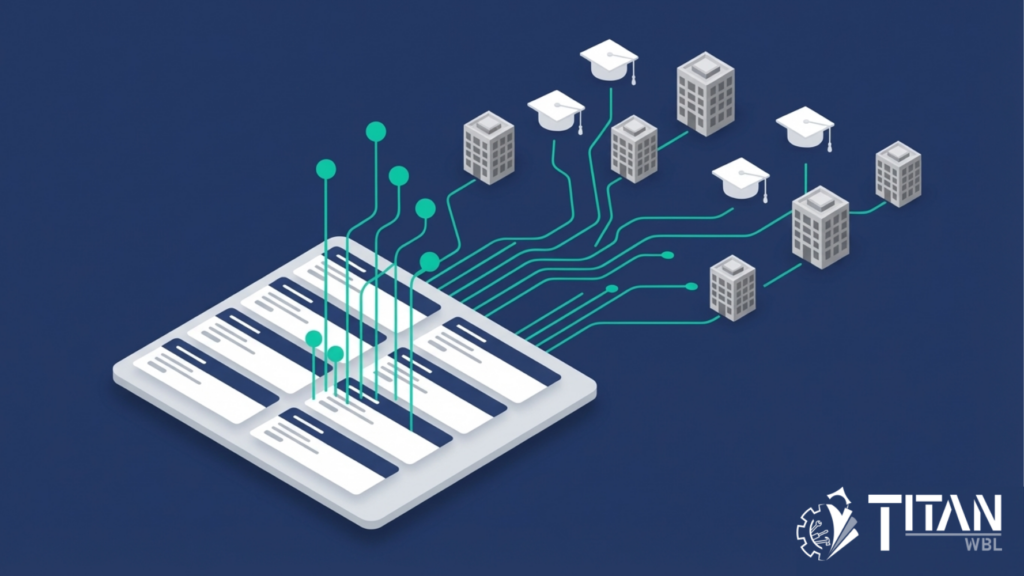
The biggest barrier preventing districts from scaling is fragmented data. If your contacts live in the email inboxes of five different teachers, you cannot effectively expand work-based learning opportunities. You likely have employers who are willing to host more interns, but because their data isn’t centralized, no one knows to ask them.
To scale without hiring, you must move from isolated spreadsheets to a single source of truth using dedicated Industry Partner Management.
Why Centralization Matters
When you consolidate your data, you gain an immediate view of your “capacity gap”: the difference between available placements and student demand. A centralized platform like TitanWBL allows you to:
- Track Partner Participation: See exactly which partners are active and what experiences they offer across the district.
- Manage Advisory Boards: Schedule meetings, share documents, and track attendance in one place, ensuring you aren’t over-burdening the same contacts.
- Match Students Faster: Instantly identify underutilized partners to open up new spots for students.
By simply organizing what you already have, you can often find the capacity to expand work-based learning opportunities by 20% or more in the first year alone.
(Image Placeholder: Screenshot of a TitanWBL dashboard showing a map of employer partners)
2. Automate Compliance and Feedback Loops
Following up with employers and managing paperwork is the most time-consuming part of a coordinator’s job. Chasing down internship evaluations and generating compliance documents can take hours every week. If you want to expand work-based learning opportunities, you cannot afford to spend your day buried in paperwork.
Automation is the force multiplier that allows one person to do the work of three.
The “Set It and Forget It” Strategy
Instead of manual drafting and chasing, successful districts use specialized modules to handle routine workflows. You should look for a system that includes:
- Internship Management: Coordinate placements end-to-end, from assignment to final evaluation, without manual tracking.
- Form Creator: Deploy surveys and feedback forms to collect data from stakeholders automatically, ensuring you have the insights needed for grant reporting.
- Work Permit Generators: For districts in states like California, automating the creation of compliant work permits removes a massive administrative bottleneck.
When you automate these administrative tasks, your existing staff can focus on high-value activities (like building relationships with new partners), which is the only way to truly expand work-based learning opportunities in the long term.
Read more about the benefits of automation in education here.
3. Streamline Student Tracking with SIS Integration
Tracking student hours and linking them to specific CTE pathways is often a data entry nightmare. If your district relies on paper logs or manual entry, you are creating a bottleneck that limits growth. You cannot expand work-based learning opportunities if you have to manually input data for 500 students.
The Power of Integration
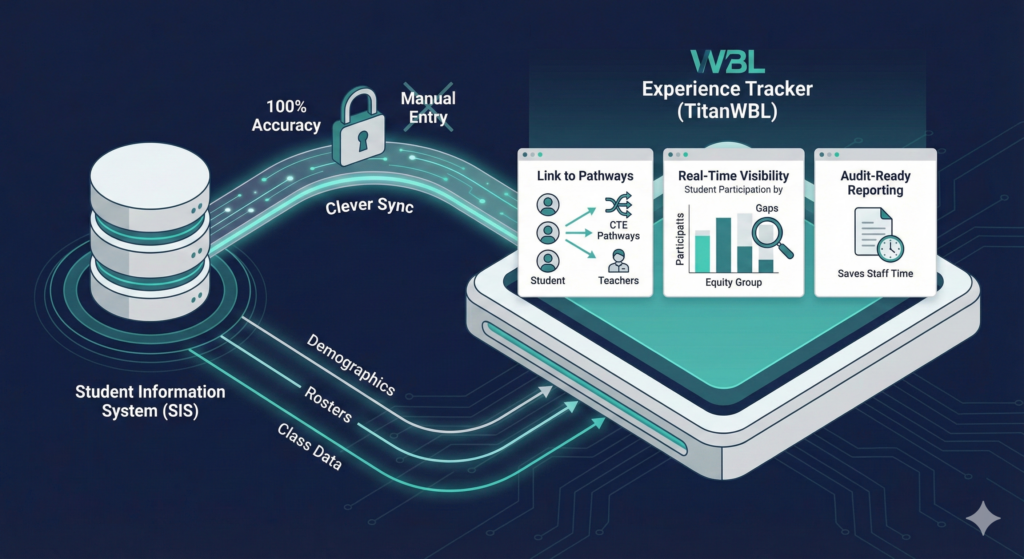
The most scalable programs use a WBL Experience Tracker that integrates directly with their Student Information System (SIS). By syncing rosters via tools like Clever, you can:
- Eliminate Manual Entry: Automatically pull student demographics and class data, ensuring 100% accuracy.
- Link Experiences to Pathways: Easily record WBL experiences and tie them directly to specific CTE pathways and teachers.
- Gain Real-Time Visibility: Use dashboards to see exactly which students are participating and identified equity gaps immediately.
This approach not only saves staff time but ensures that your reporting is audit-ready at a moment’s notice.
4. How TitanWBL Positions You for Growth
To execute these strategies, you need the right infrastructure. TitanWBL is designed specifically to help districts expand work-based learning opportunities by solving the chaos of spreadsheets.
TitanWBL acts as a centralized command center for your CTE program, offering specific modules to handle every aspect of WBL:
- WBL Experience Tracker: The heart of the system for recording and linking experiences.
- Data Dashboards & Explorer: User-generated views to analyze equity and program health.
- Industry Partner & Advisory Board Management: Tools to professionalize your employer relationships.
- Clever SIS Sync: Automation that keeps your student data accurate without manual work.
Learn more about how TitanWBL automates your workflow.
Conclusion
You do not need a bigger budget to grow your impact. By centralizing your partner data, automating compliance workflows, and streamlining student tracking through SIS integration, you can unlock the capacity to expand work-based learning opportunities dramatically.
The future of CTE isn’t about working harder; it’s about working smarter. With platforms like TitanWBL, you can build a sustainable, scalable program that prepares more students for the future, without adding a single line to your payroll.
Sources
- Advance CTE: Connecting the Classroom to Careers: Work-Based Learning
- National Governors Association: State Strategies to Scale Work-Based Learning
- Brookings Institution: Work-Based Learning Can Advance Equity and Opportunity