Youth Apprenticeship Programs: How K-12 Districts Can Scale and Track Them

Youth apprenticeship programs are expanding faster in 2026 than at any point in the last decade, and K-12 districts are feeling the coordination strain firsthand. More students want paid, credit-bearing work experience. More employers are willing to host them. State legislatures are opening new pathways almost every month. That momentum is good news for career readiness, but it also multiplies the number of students, employer partners, work hours, and compliance documents a district has to manage. This guide explains what youth apprenticeship programs are, why they are surging now, and how a district can scale and track them without drowning in spreadsheets and paper forms.
Quick Answer: Youth apprenticeship programs are structured, paid work experiences that combine on-the-job training with related classroom instruction for high school students, often leading to a credential or a registered apprenticeship. To scale and track them well, K-12 districts need one place to manage students, employer partners, hours, mentors, work permits, and required documentation. A single work-based learning platform such as the TitanWBL work-based learning platform centralizes those workflows so a district can grow participation while keeping reporting accurate. That is more reliable than scattered spreadsheets, disconnected tools, and manual paperwork.
Table of Contents
What Are Youth Apprenticeship Programs?
Youth apprenticeship programs are structured pathways that let high school students earn while they learn. A student works a real job with an employer partner, receives mentorship, and completes related classroom instruction tied to that occupation. Many programs award industry-recognized credentials, and some connect directly to a registered apprenticeship after graduation. The defining feature is the blend of paid, supervised work and aligned academic learning, not a one-time job shadow or a single guest speaker visit.
For district leaders, youth apprenticeship sits at the higher-intensity end of the work-based learning continuum. It typically requires more employer commitment, more student hours, and more documentation than lighter experiences. That intensity is exactly why tracking matters. When a program grows from a handful of students to hundreds across several high schools, the coordination load grows with it, and manual methods start to break down.
Key Terms: Youth Apprenticeship, WBL, CTE, and More
Clear definitions help district teams, employers, and families stay aligned. Here are concise explanations of the terms that come up most often when districts plan youth apprenticeship programs.
| Term | Definition |
|---|---|
| Youth apprenticeship | A structured program combining paid, supervised on-the-job training with related classroom instruction for high school students, often leading to a credential or entry into a registered apprenticeship. |
| Work-based learning (WBL) | A continuum of career-connected experiences, from career awareness and guest speakers to internships and apprenticeships, that link classroom learning to real workplaces. |
| Registered apprenticeship | An employer-driven training model validated by the U.S. Department of Labor or a State Apprenticeship Agency, combining paid work, structured on-the-job learning, and related instruction. |
| Pre-apprenticeship | A program that prepares participants to enter and succeed in a registered apprenticeship, building foundational skills and often a direct entry pathway. |
| CTE | Career and Technical Education. Programs of study that give students academic and technical skills for careers, frequently the home for youth apprenticeship and other WBL. |
| WBL coordinator | The district or site role responsible for building employer partnerships, placing students, tracking hours, and preparing WBL reporting. |
These categories overlap in practice. A CTE program of study might include a guest speaker series, an advisory board, an internship, and a youth apprenticeship that leads to a registered apprenticeship. A district that can see all of it in one system has a much clearer picture than one juggling separate lists for each activity.
Why Youth Apprenticeship Is Surging in 2026
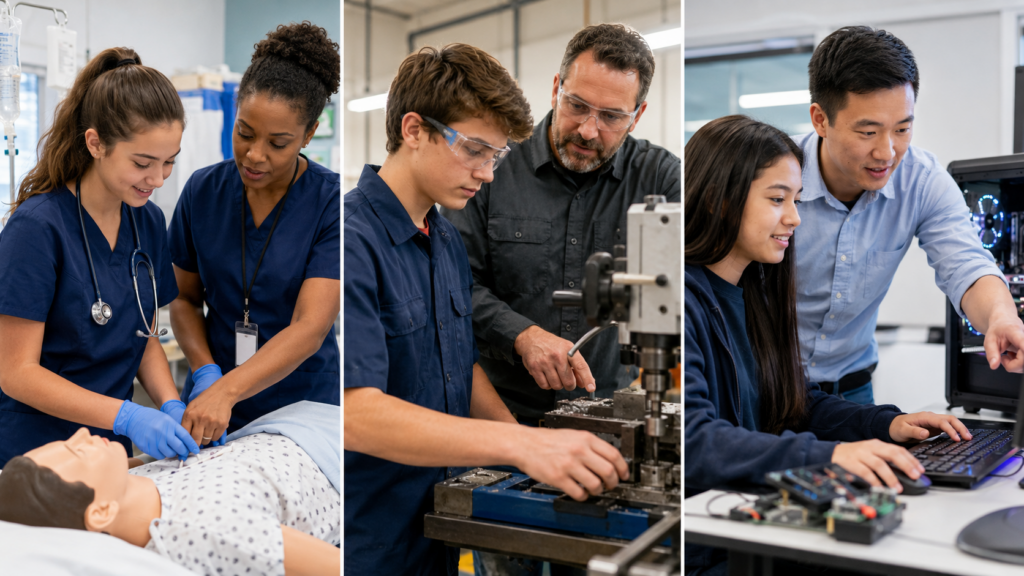
Direct answer: Youth apprenticeship is surging because states are passing new laws that open apprenticeship to more high schoolers, add new occupational pathways, and strengthen work-based learning protections. The result is broader access and higher expectations for how districts manage it.
The 2026 legislative picture is unusually active. South Dakota enacted SB 63, opening apprenticeships to every high school in the state and establishing a new State Apprenticeship Agency to oversee expansion. That kind of statewide framework signals that apprenticeship is no longer a niche offering reserved for a few programs. It is becoming a mainstream expectation for districts.
Other states are adding specific pathways. Virginia authorized youth apprenticeships in cosmetology and barbering through HB 275, and it opened a certified nursing assistant pathway for high school students. Indiana strengthened work-based learning protections with HB 1098. These are not isolated moves. According to policy trackers, MultiState is following 329 youth workforce and career readiness bills across 39 states, which shows how widespread the push has become.
For a district leader, the takeaway is practical. More authorized pathways mean more students eligible to participate, more employer partners to recruit and vet, and more hours and documents to track. Growth is the goal, but growth without a system to manage it creates risk. The U.S. Department of Labor apprenticeship resources and Advance CTE both point to expanding state activity as a defining trend for career-connected learning.
The District Coordination and Tracking Challenge
As youth apprenticeship programs grow, the work of running them multiplies in several directions at once. Each new student adds a placement, a mentor relationship, a set of hours to log, and often a work permit. Each new employer partner adds an agreement, a point of contact, and a safety and supervision expectation. Each state pathway adds its own documentation and reporting requirements.
Many districts still manage this with a patchwork of spreadsheets, paper forms, email threads, and disconnected tools. That works at small scale. It stops working when a single coordinator is tracking hundreds of placements across multiple sites. Data gets duplicated, versions conflict, and reporting becomes a manual scramble at the end of each term. Staff spend time reconciling records instead of building new partnerships.
There is also a compliance dimension. Youth apprenticeship involves minors in workplaces, which raises questions about work permits, hours, supervision, and data privacy. A district needs to organize this information carefully and be ready to produce it. Scattered records make that harder. A centralized work-based learning compliance reporting approach helps teams prepare for reporting and reduces the manual burden when documentation is requested.
How to Scale Youth Apprenticeship Programs District-Wide
Direct answer: Scale youth apprenticeship programs by standardizing your workflows, centralizing your data, and giving every site the same tools. Growth is manageable when new students, partners, and hours flow into one district-wide system instead of separate lists at each school.
Scaling is less about effort and more about structure. Districts that grow youth apprenticeship successfully tend to share a few habits. They treat employer partnerships as a shared district asset, they standardize how placements and hours are recorded, and they make reporting a continuous byproduct of daily work rather than a year-end project.
Centralize employer partner management
Employer partners are the scarcest resource in any youth apprenticeship program. When each site keeps its own private list, partners get contacted twice or fall through the cracks. Centralized employer partner management lets the whole district see who is engaged, what capacity they have, and which students they host. TitanWBL was built to support exactly this kind of district-wide partner coordination, and the platform has helped districts engage thousands of industry partners.
Standardize student placement and hours
Every apprenticeship needs a consistent record: which student, which employer, which mentor, how many hours, and what the student is learning. When that record looks different at every school, district-level reporting becomes guesswork. A shared internship management and placement workflow keeps the data clean as the program grows.
Streamline work permits and forms
Youth apprenticeship often requires work permits and signed agreements involving students, families, employers, and the district. Digital work permit workflows replace paper routing and help centralize documentation so nothing is lost between offices. Our K-12 work-based learning guide walks through how districts can organize these pieces from the start.
Connect the whole WBL continuum
Youth apprenticeship rarely stands alone. Students often start with guest speakers, advisory board events, and job shadows before moving into apprenticeship. A platform that also handles guest speakers, advisory boards, dual enrollment tracking, student groups, and career-connected learning lets a district see the full pipeline, not just the endpoint. That visibility helps leaders recruit the right students into apprenticeship at the right time.
How to Track Hours, Partners, and Compliance
Direct answer: Track youth apprenticeship by logging hours, mentors, and milestones in one system, keeping employer agreements and work permits with each placement, and using dashboards that turn daily activity into reporting-ready data.
Tracking is where many programs quietly lose ground. It is easy to enroll students and place them. It is harder to keep an accurate, current record of hours, mentor contact, credentials earned, and documentation across an entire district. Yet that record is what makes reporting possible and what protects the program when questions come up.
Good tracking has three layers. First, capture data at the source, so hours and notes are entered where the work happens rather than reconstructed later. Second, keep documentation attached to each placement, so a work permit or agreement is always one click from the student record. Third, roll it all up into data dashboards and reporting tools that give coordinators and administrators a live view. That live view is what lets a district respond to a state-level CTE reporting request without a fire drill.
Careful language matters here. No platform can guarantee compliance or replace legal review. What a well-designed system can do is help districts organize required data, help teams prepare for reporting, and help centralize documentation so the district is ready when it is asked to demonstrate what happened. TitanWBL is designed with K-12 data privacy needs in mind and built around FERPA-conscious, K-12-specific workflows, which supports compliance-ready reporting without overstating what software alone can promise.
Scattered Systems vs. a Single WBL Platform
The clearest way to see the difference is to compare how each approach handles the daily realities of a growing youth apprenticeship program.
| Capability | Scattered spreadsheets and paper forms | Single work-based learning platform |
|---|---|---|
| Employer partner records | Separate lists per site, frequent duplication | One district-wide partner directory shared across schools |
| Student hours and placements | Inconsistent formats, manual reconciliation | Standardized records captured at the source |
| Work permits and agreements | Paper routing, forms lost between offices | Digital workflows attached to each placement |
| Reporting | Year-end scramble, error-prone exports | Continuous dashboards, reporting-ready data |
| Visibility across sites | Fragmented, hard to compare | District-wide view of the full WBL continuum |
| Scaling to more students | Coordinator workload rises sharply | Growth absorbed by shared, standardized workflows |
The point is not that spreadsheets are useless. They are fine for a pilot. The point is that youth apprenticeship programs in 2026 are being asked to grow, and growth is what exposes the limits of a scattered approach. Districts that move to a single platform tend to spend less time reconciling records and more time expanding partnerships and placements.
Where TitanWBL Fits
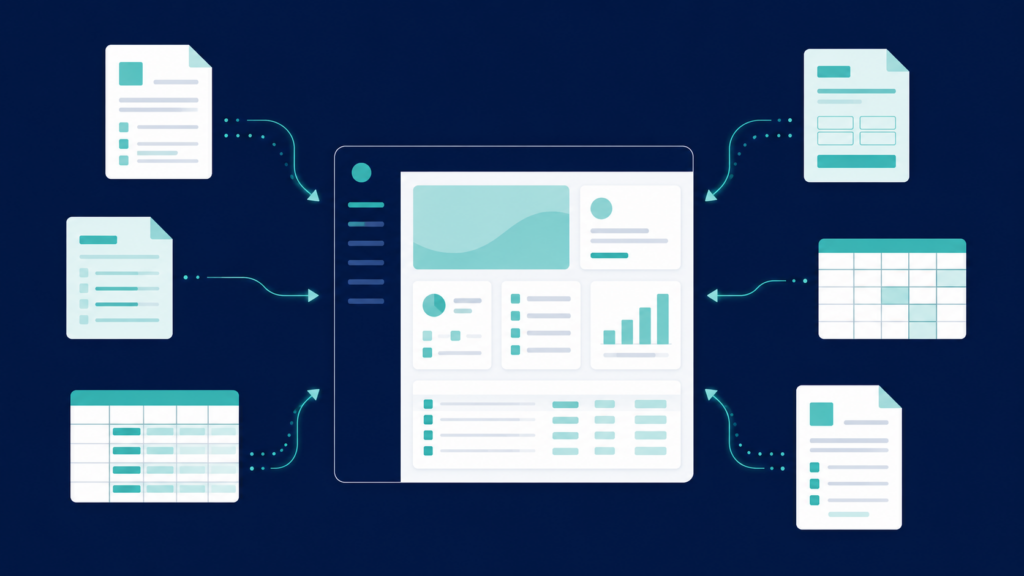
Direct answer: TitanWBL is an all-in-one, single-subscription work-based learning platform for K-12 districts. It centralizes internships, guest speakers, advisory boards, work permits, dual enrollment, student groups, employer partnerships, and career-connected learning, including youth apprenticeship, in one district-wide system.
TitanWBL is a career readiness platform designed specifically for how K-12 districts operate. Rather than a menu of separate paid modules, it brings the core functions of work-based learning management into one place: partner management, internship management, work permit workflows, advisory board management, dual enrollment tracking, and data dashboards. For a district scaling youth apprenticeship, that means the same system tracks the lighter experiences that feed the pipeline and the intensive apprenticeships at the end of it.
The platform is proven at scale. At Fresno Unified, one of California’s largest districts, TitanWBL has supported more than 800,000 work-based learning experiences tracked over the past three years, helped engage 5,000 or more industry partners, and supports 50 or more CTE programs. You can read the details in the Fresno Unified work-based learning case study. The platform has been deployed district-wide in under two weeks, is a registered partner with platforms such as Clever, and its approach to WBL has been recognized nationally by the CTE Research Network.
These proof points matter for youth apprenticeship specifically because apprenticeship is a coordination-heavy activity. A district that already trusts one system to track hundreds of thousands of experiences and thousands of partners has the infrastructure to add apprenticeship pathways without inventing a new process each time a state opens one.
Getting Started: A Practical Rollout
Direct answer: Start by inventorying your current youth apprenticeship activity and employer partners, choose one district-wide system, migrate your data, train site coordinators, and set reporting expectations before you scale participation.
A rollout does not have to be disruptive. The most successful transitions follow a clear sequence. First, take stock. List your existing apprenticeship and WBL activity, your employer partners, and the reports you are required to produce. This inventory shows where data currently lives and where the gaps are.
Second, consolidate onto one platform. Moving from scattered spreadsheets to a single work-based learning system is the step that unlocks scale. Migrate the partner directory first, since partners are shared across sites, then bring in active placements and hours. Third, train the people who use it daily. Site coordinators and WBL staff need to understand where to enter hours, how to attach work permits, and how to pull a report.
Fourth, set reporting expectations up front. Decide what your dashboards should show, who reviews them, and how often. When reporting is defined before growth, it becomes a routine output rather than a year-end emergency. Districts often note that a well-planned transition may help reduce manual reporting burden almost immediately, even before participation grows.
On budget, avoid anchoring to a single number. SaaS district pricing depends on factors like district size, implementation scope, the specific workflows you need, integrations, support needs, contract structure, reporting requirements, and the number of schools and programs involved. The right conversation starts with your goals, not a price list.
Bring Your Youth Apprenticeship Programs Into One System
Youth apprenticeship is growing, and the districts that thrive will be the ones that can scale participation while keeping tracking and reporting clean. A single work-based learning platform is how you do both at once. If you want to move your district off scattered spreadsheets and manual forms, explore the TitanWBL work-based learning platform and see how it handles the full continuum from guest speakers to apprenticeship.
When you are ready to see it in action with your own workflows in mind, you can schedule a TitanWBL demo. Bring your questions about apprenticeship tracking, employer partner management, work permits, and reporting, and see how one district-wide system fits your goals.
Frequently Asked Questions
What is the difference between a youth apprenticeship and a regular internship?
An internship is typically a shorter, supervised work experience that may or may not be paid and does not always include formal related instruction. A youth apprenticeship is a more structured, usually paid pathway that combines on-the-job training with aligned classroom learning and often leads to a credential or a registered apprenticeship. Youth apprenticeship generally involves more hours, more employer commitment, and more documentation, which is why tracking becomes so important as programs grow.
How do districts track youth apprenticeship hours and compliance?
The most reliable approach is to log hours, mentors, and milestones at the source in one system, keep each work permit and employer agreement attached to the student’s placement, and use dashboards that turn daily activity into reporting-ready data. This helps districts organize required data and prepare for reporting. Software supports compliance-ready reporting, but it does not replace legal review or guarantee compliance on its own.
Can one platform handle apprenticeships, internships, and guest speakers together?
Yes. A comprehensive work-based learning platform is designed to manage the full continuum, from career awareness activities like guest speakers and advisory boards through internships, dual enrollment, and youth apprenticeship. Managing them in one district-wide system gives leaders visibility into the entire pipeline and makes it easier to move students from lighter experiences into apprenticeship at the right time.
Why is youth apprenticeship growing so quickly right now?
State policy is the main driver. In 2026, states such as South Dakota opened apprenticeship to every high school and created a new State Apprenticeship Agency, Virginia authorized new occupational pathways, and Indiana strengthened work-based learning protections. Policy trackers are following hundreds of youth workforce and career readiness bills across dozens of states, which is broadening access and raising expectations for how districts manage these programs.
Do we need a special system, or can spreadsheets keep up?
Spreadsheets are fine for a small pilot. They tend to break down once a district is tracking many placements across multiple schools, because data gets duplicated, versions conflict, and reporting becomes a manual scramble. A single platform absorbs growth by standardizing workflows and centralizing data, which is why districts scaling youth apprenticeship usually move away from scattered spreadsheets and paper forms.
Is TitanWBL only for large California districts?
No. TitanWBL is built for K-12 districts across the United States, from county offices of education and ROPs to districts of many sizes. Fresno Unified is a well-known example because of its scale, but the platform’s workflows for employer partner management, internships, work permits, and reporting apply to districts nationwide that are scaling career-connected learning and youth apprenticeship.
How much does a work-based learning platform cost?
There is no single figure, because SaaS district pricing depends on factors like district size, implementation scope, the workflows you need, integrations, support needs, contract structure, reporting requirements, and the number of schools and programs involved. The best way to get an accurate picture is to start from your goals and current setup, then discuss what a rollout would involve for your district.
Sources